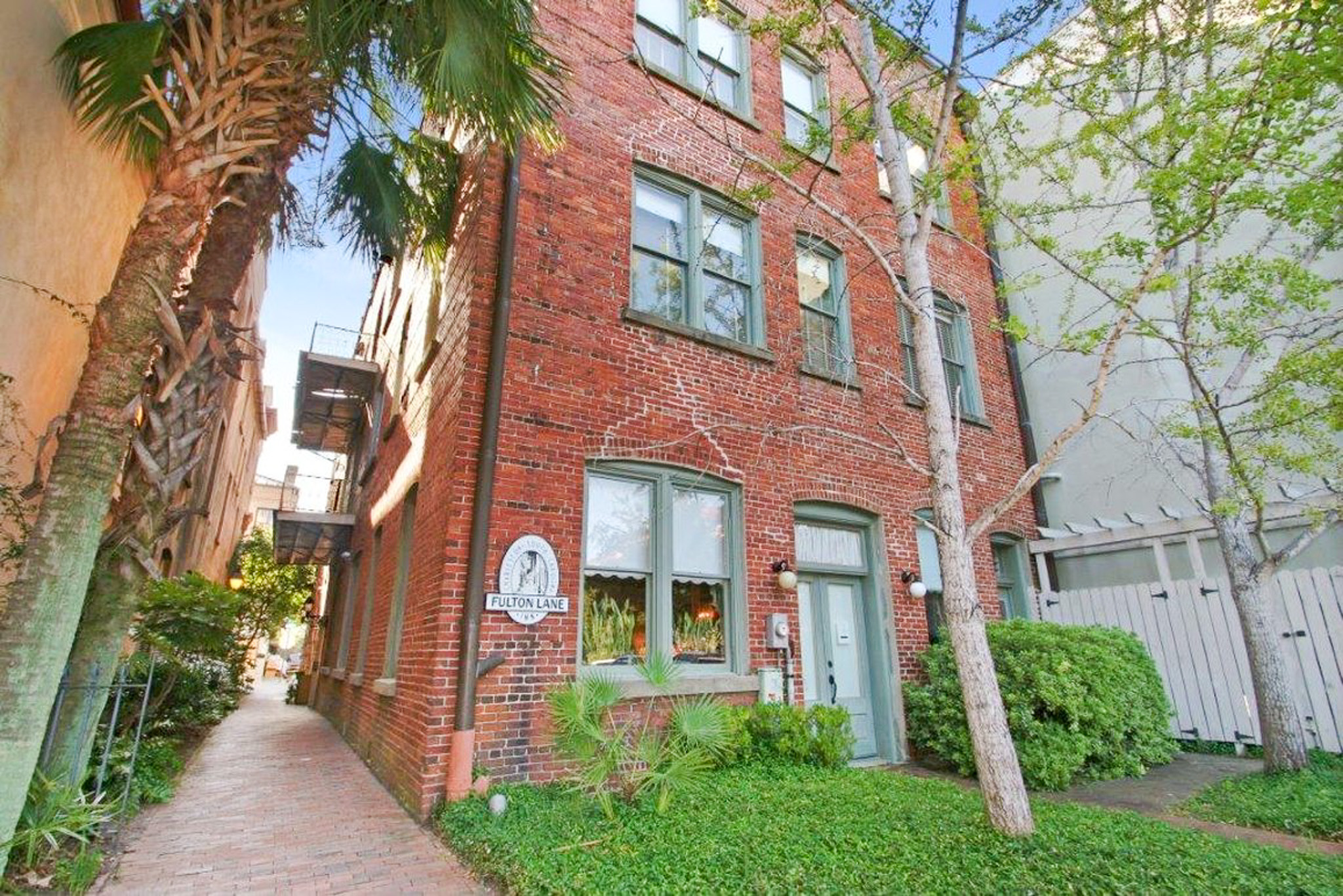
A Self-Guided Walking Tour from Fulton Lane Inn
Charleston is a city best discovered on foot, where centuries of history unfold along cobblestone streets, through hidden gardens, and beneath the shade of ancient live oaks.
Tucked just off historic King Street, Fulton Lane Inn puts some of Charleston’s most remarkable landmarks within easy walking distance. This self-guided tour invites you to discover the Holy City’s colorful architecture, beautiful gardens, waterfront scenery, and stories that have shaped Charleston for more than 350 years.
Along the way, you’ll encounter centuries-old buildings, explore picturesque streets, and discover some of the city’s most recognizable landmarks. Take your time. Pause beside a fountain, admire an architectural detail, or linger over a view of Charleston Harbor. In a city with so many stories to tell, some of the most memorable discoveries happen between destinations.
A Few Tips for Your Walk: Wear comfortable shoes, as Charleston’s historic sidewalks and cobblestone streets can be uneven. Bring water during warmer months, and remember that museum admission and opening hours vary. American Gardens is generally open daily from 7 am to 9 pm, while Washington Square is open during daylight hours. Many of the city’s most beautiful discoveries can be enjoyed from the street, so feel free to explore at your own pace.
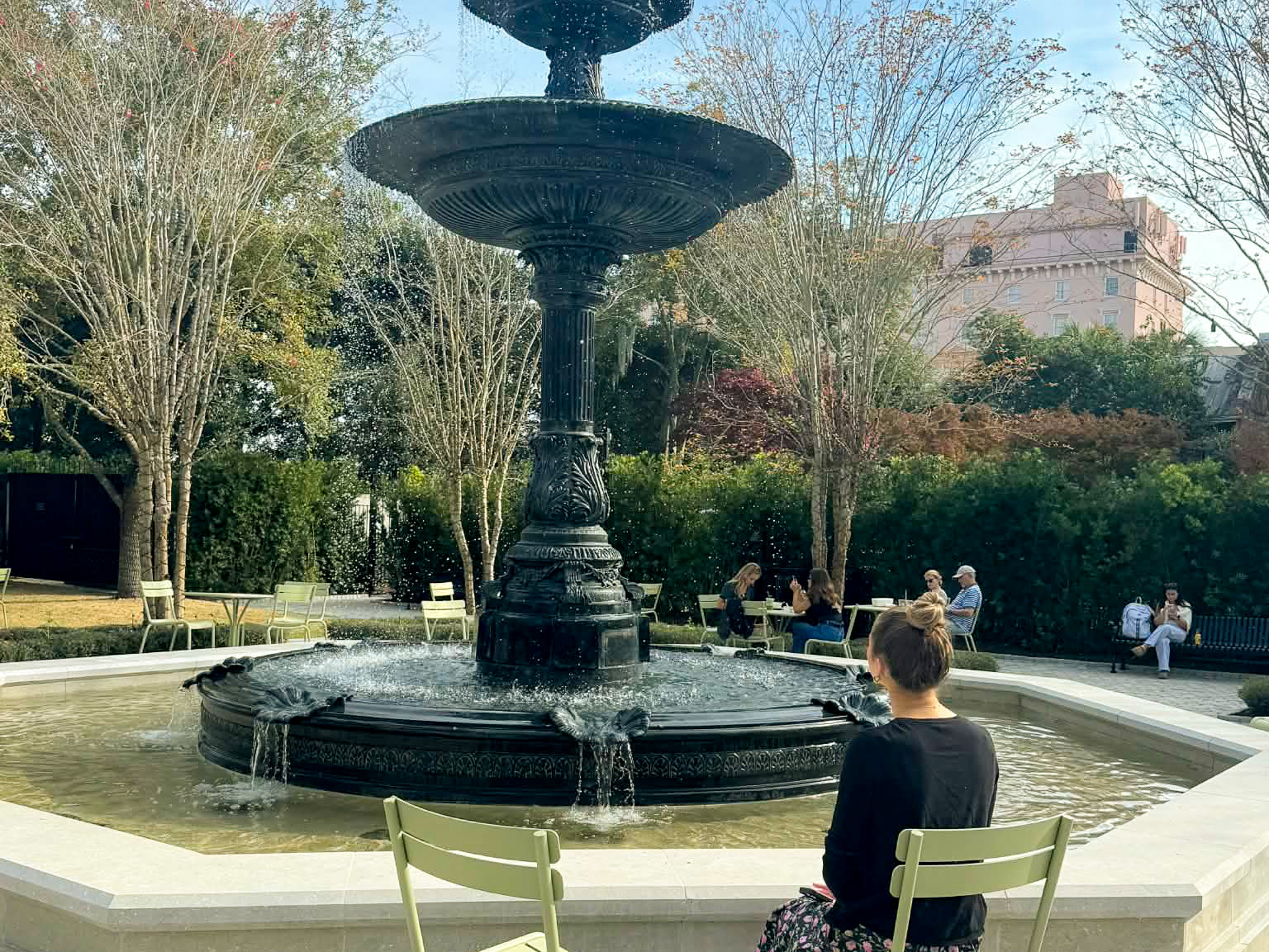
American Gardens
Directions: Exit Fulton Lane Inn onto King Street and turn left (south). Walk about one minute and enter American Gardens on your left.
What to See: Opened in 2025, American Gardens is one of Charleston’s newest public green spaces. Stroll past a graceful row of crape myrtles, admire the fountains and seasonal plantings, and discover a beautifully landscaped garden connecting two of Charleston’s most historic streets. With its inviting pathways, open lawn, and thoughtfully designed gathering spaces, it’s a lovely place to begin your exploration of the city.

Gibbes Museum of Art
Directions: Exit the gardens onto Meeting Street and turn right (south). The museum is ahead on your right.
What to See: Housed in a magnificent Beaux-Arts building, the Gibbes Museum of Art celebrates American art through the distinctive lens of Charleston and the Lowcountry. Its collections span centuries, exploring the people, landscapes, and cultural influences that have shaped the region. Even a brief visit offers an opportunity to admire the museum’s elegant architecture and beautiful stained-glass dome.
Admission Required to Enter
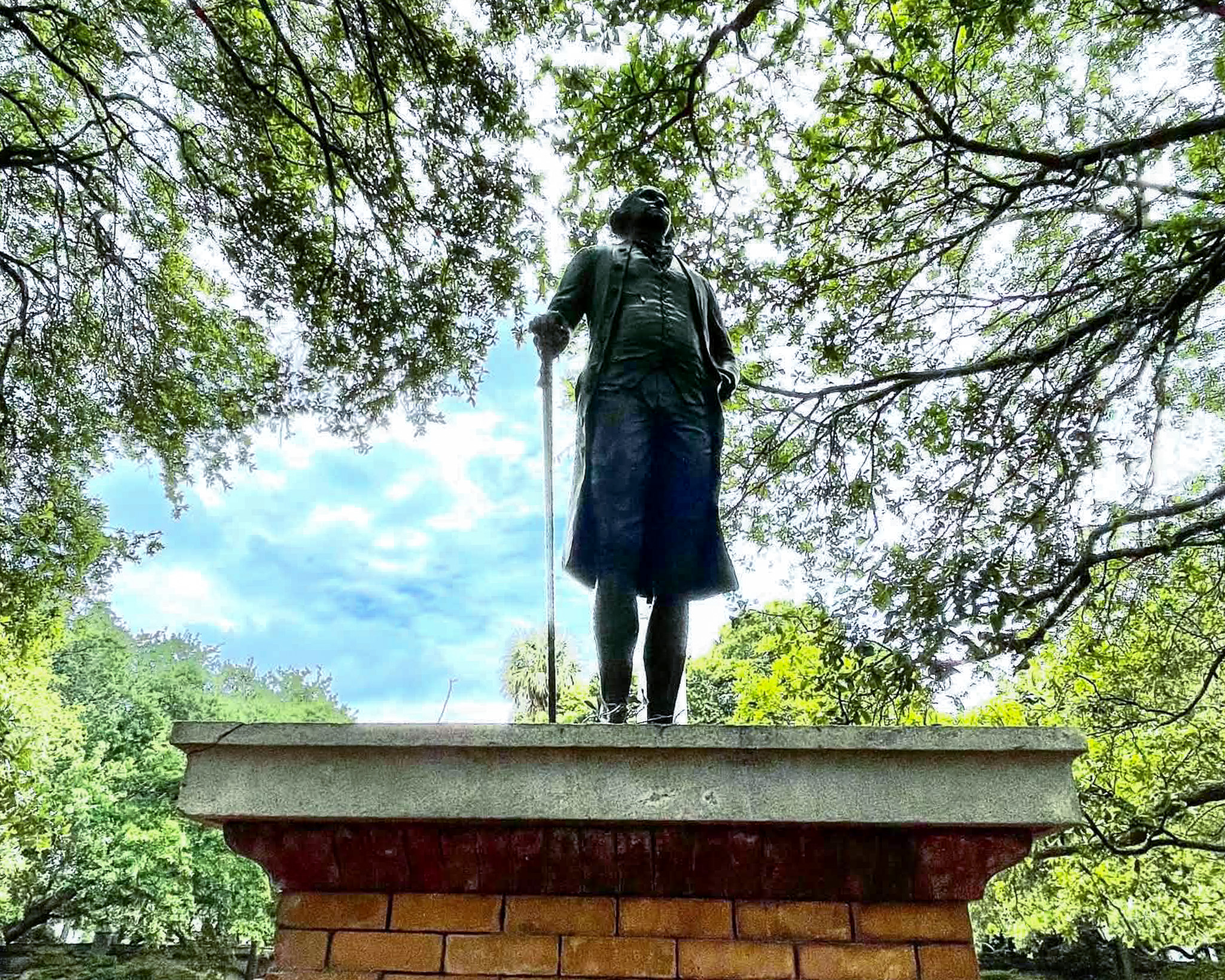
Washington Square
Directions: From the museum, turn right (south) onto Meeting Street. Cross Meeting Street at Queen Street and enter Washington Square through the gates on your left (before Broad Street). Walk through the park and exit to the right onto Broad Street.
What to See: Tucked behind Charleston City Hall, Washington Square is a beautiful historic garden shaded by mature live oaks. Wander along its pathways, admire the monuments, and enjoy a glimpse of Charleston’s history in this intimate green space. Just outside the park, at the intersection of Meeting and Broad Streets, stand the famous Four Corners of Law, where buildings representing municipal, county, federal, and religious authority occupy the four corners.
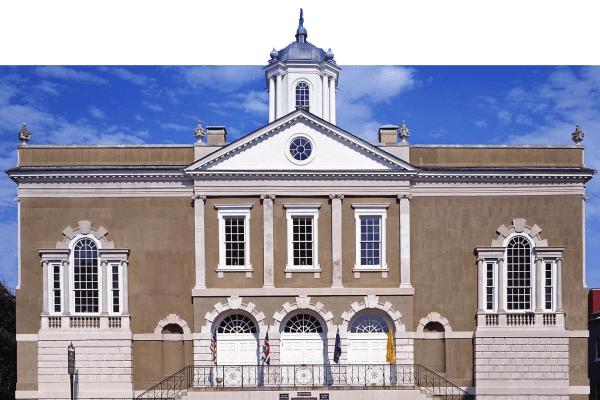
Directions: Exit Washington Square onto Broad Street and turn left (east). Follow Broad Street to East Bay Street. The Old Exchange stands directly ahead.
What to See: Completed in 1771, the Old Exchange is one of Charleston’s most significant surviving colonial buildings. Over the centuries, it has served as a commercial exchange, customs house, and gathering place for important civic events. Its history also includes imprisonment during the Revolutionary War and connections to Charleston’s slave trade. Today, the building and its underground Provost Dungeon offer a fascinating look into the city’s colonial and Revolutionary-era history.
Admission Required to Enter

Rainbow Row
107-79 East Bay Street
Directions: Exit the Old Exchange onto East Bay Street and turn left (south). The 13 colorful historic homes of Rainbow Row will be on your right beginning at Elliot Street.
What to See: Perhaps Charleston’s most recognizable streetscape, Rainbow Row is a collection of 13 historic houses painted in soft shades of pink, yellow, blue, and green. Dating primarily to the 18th century, these Georgian-style homes were restored during the 20th century, becoming enduring symbols of Charleston’s architectural preservation. Their colorful facades, shuttered windows, and wrought-iron details make this one of the city’s most photographed locations.
Waterfront Park
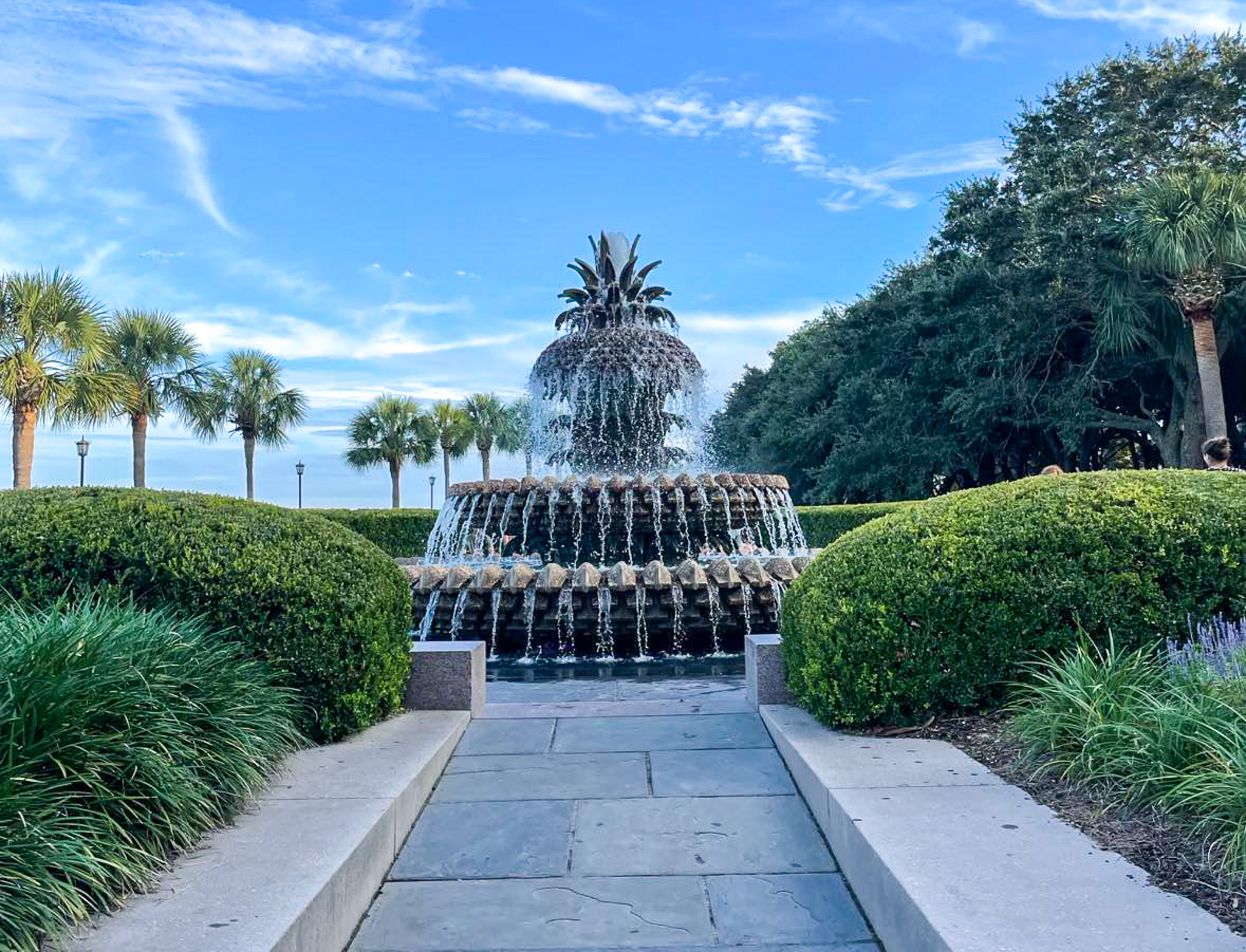
Directions: At the end of Rainbow Row, turn left (east) onto S. Adgers Wharf, then left (north) onto Concord Street. Enter Waterfront Park and follow the waterfront promenade north to the Pineapple Fountain and harbor-front swings.
What to See: Stretching along the Cooper River, Waterfront Park offers some of Charleston’s loveliest harbor views. Walk beneath the shade trees, admire the passing ships, and discover the Pineapple Fountain, a beloved symbol of Southern hospitality. Farther north, the pier features wooden swings overlooking the water—a wonderful place to pause and take in the harbor breeze.
Old Slave Mart Museum
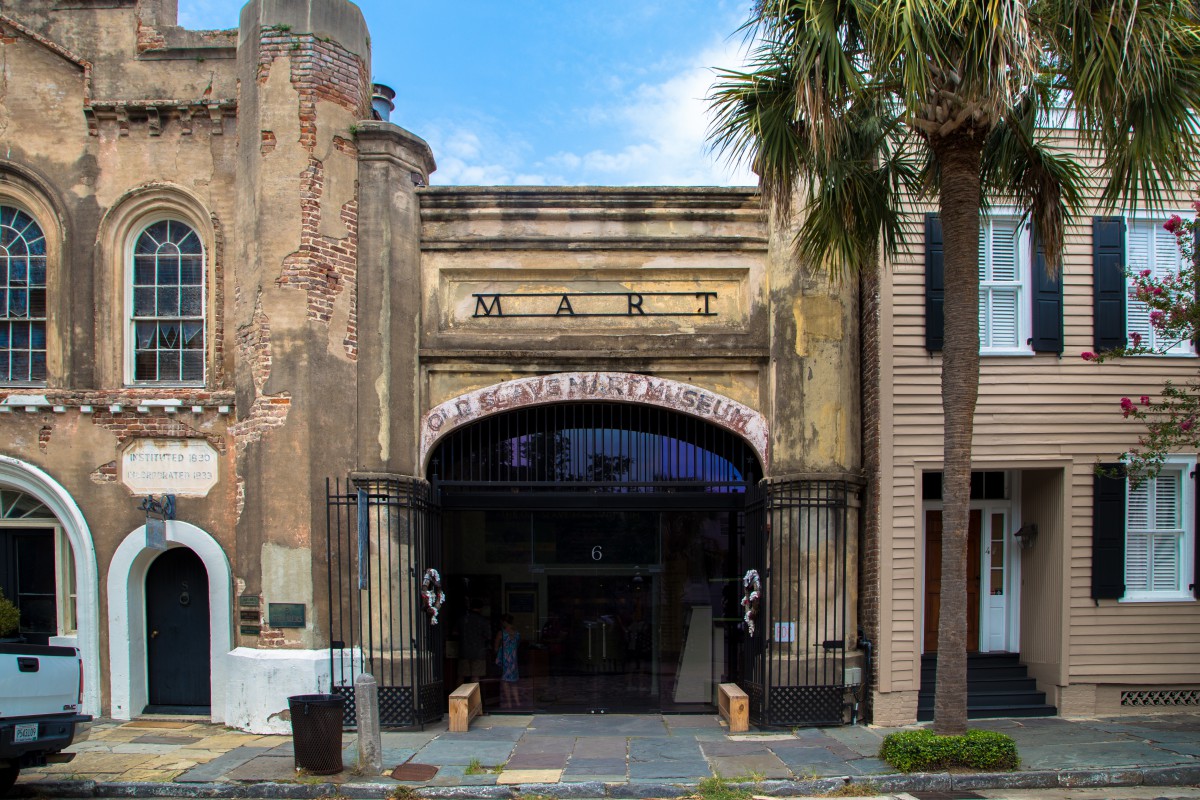
Directions: Walk north through Waterfront Park to Vendue Range. Head toward East Bay Street and continue onto Queen Street. Turn left onto State Street, then turn right onto Chalmers Street. Your destination will be on the right.
What to See: With its distinctive cobblestones and historic buildings, Chalmers Street offers one of Charleston’s most atmospheric streetscapes. At 6 Chalmers Street stands the Old Slave Mart Museum, located on the site of a former slave auction gallery. The museum preserves and interprets an essential and painful chapter of Charleston’s history, honoring the experiences of enslaved African Americans and examining the city’s role in the domestic slave trade. It is an important place to reflect on the people whose lives and labor shaped Charleston and whose stories remain inseparable from its history.
Admission Required to Enter
The Pink House
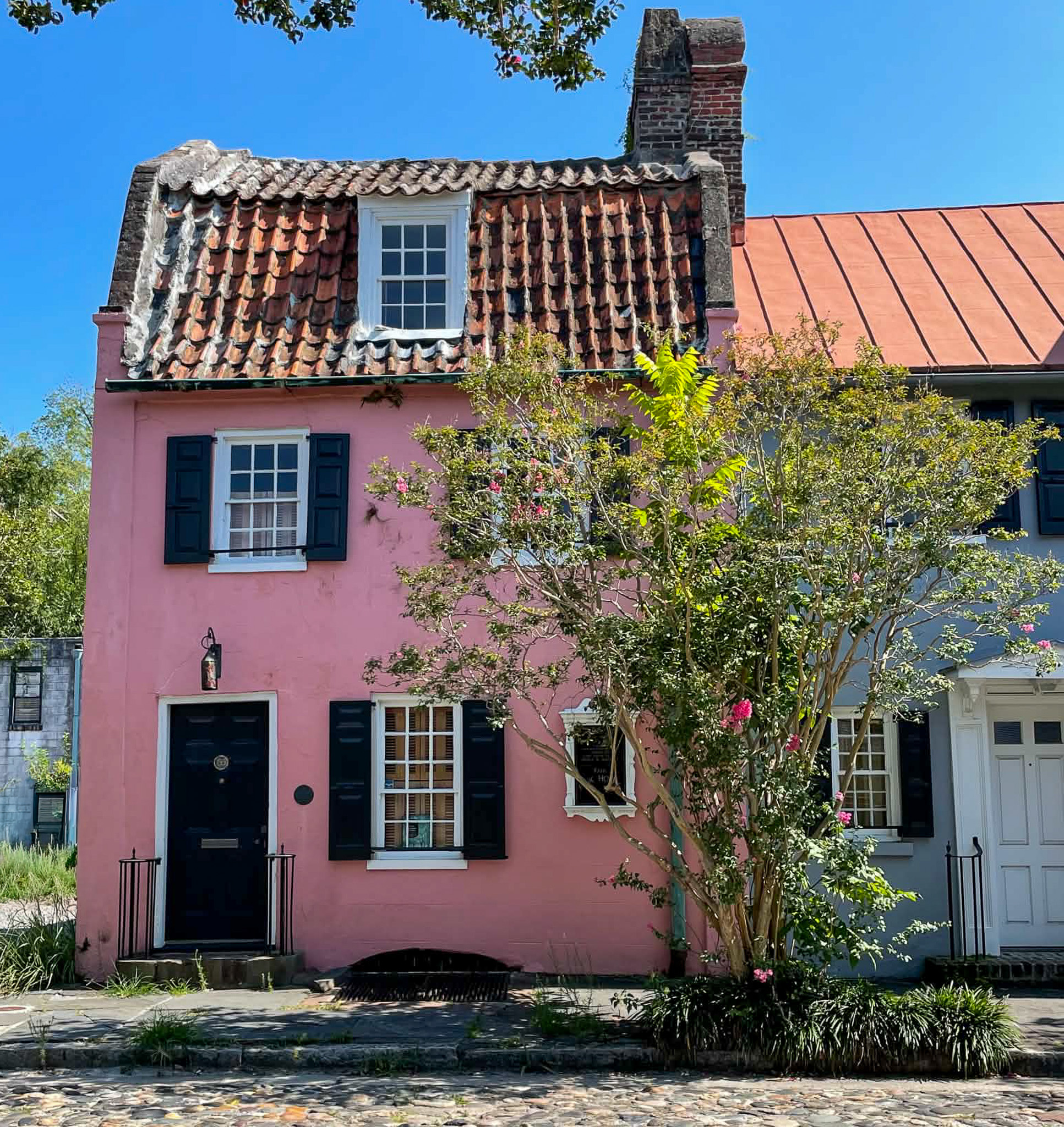
Directions: Continue west along Chalmers Street. Look for the distinctive pink Bermuda stone building on your left.
What to See: Believed to date to around 1712, the Pink House is among Charleston’s oldest surviving buildings. Constructed from distinctive pink Bermuda stone, the small building features a steeply pitched roof and an architectural character unlike almost anything else in the city. Originally associated with Charleston’s early commercial life, the building has served several purposes over the centuries. Today, its unusual appearance and remarkable age make it a favorite discovery along Chalmers Street.
St. Philip's Church
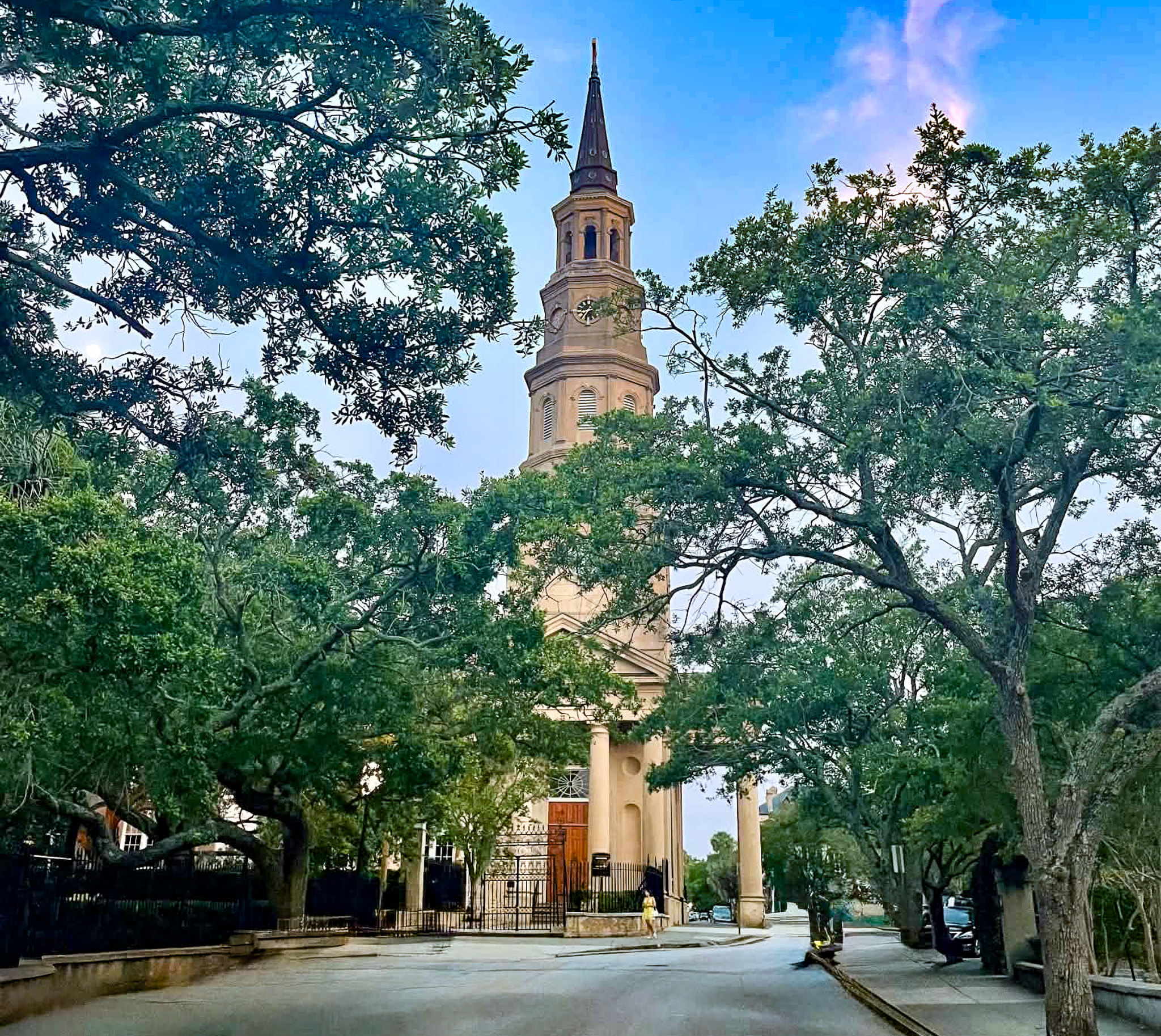
Directions: Continue west to Church Street and turn right (north). Admire the historic church and its soaring steeple. On the way, you will walk by the French Huguenot Church and Dock Street Theatre.
What to See: One of Charleston’s most recognizable landmarks, St. Philip’s Church has been part of the city’s religious and architectural history since the colonial era. The present church, completed in 1838, is celebrated for its elegant steeple and beautiful historic churchyard. Nearby, you’ll also find the French Huguenot Church and Dock Street Theatre, two more landmarks that speak to Charleston’s rich cultural and architectural heritage. This stretch of Church Street is particularly beautiful, with historic facades, iron gates, and glimpses into centuries-old courtyards.
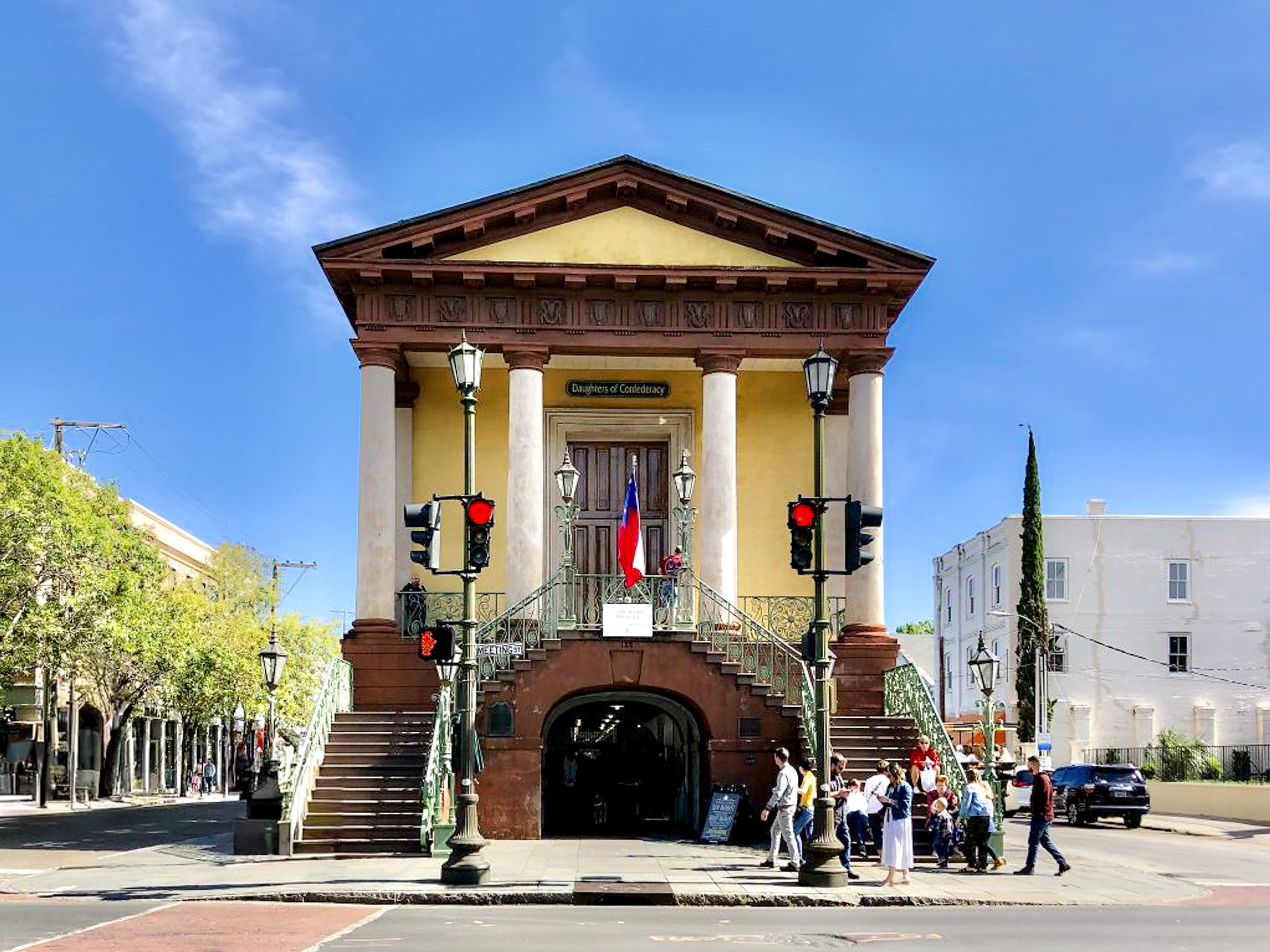
Directions: Continue north on Church Street to South Market Street. Turn left (west) and follow the market sheds to Market Hall on Meeting Street.
What to See: A Charleston institution for more than two centuries, the Charleston City Market brings together local makers, artisans, and craftspeople beneath a series of historic market sheds. Look for the intricate work of sweetgrass basket weavers, whose craft reflects generations of African and African American cultural tradition in the Lowcountry. At Meeting Street, admire the grand Greek Revival facade of Market Hall, completed in 1841. Its classical columns and imposing architecture make it one of the city’s distinctive historic buildings.
Admission Required to Enter Museum

Return to Fulton Lane Inn
Directions: From Market Hall, continue west along Market Street toward King Street. Turn left onto King Street and walk a short distance to the entrance of Fulton Lane Inn.
After discovering Charleston’s remarkable streets and stories, return to the welcoming comforts of Fulton Lane Inn. Perhaps you’ll find yourself remembering the pastel colors of Rainbow Row, the harbor breeze at Waterfront Park, or a favorite architectural detail along one of the city’s historic streets.
That’s part of the pleasure of exploring Charleston on foot. Beyond its celebrated landmarks, the city reveals itself in the smaller details, the unexpected discoveries, and the stories that stay with you long after the walk is over.
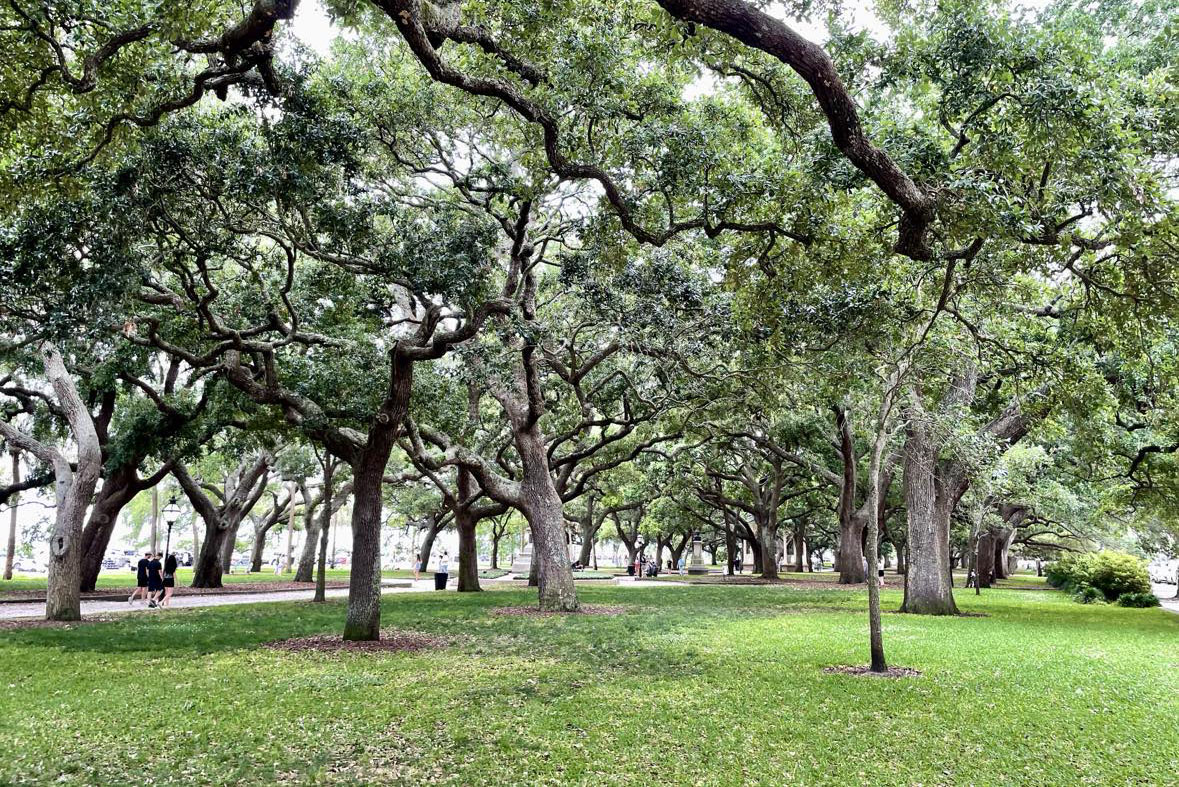
White Point Garden & The Battery
Directions: Before heading east to the Old Exchange at Stop 4, you can extend your walk south to the tip of the peninsula: From Washington Square (Stop C), continue walking south down Meeting Street all the way to the harbor to reach White Point Garden and The Battery (approx. 0.6 miles). Enjoy sweeping views of Fort Sumter and the historic grand mansions along South Battery.
Rejoining the Tour: From White Point Garden, head east along South Battery, following the waterfront as the street curves north and becomes East Battery, then East Bay Street. You’ll pass Rainbow Row (Stop E) on your left before reaching the Old Exchange and Provost Dungeon (Stop D). After visiting the Old Exchange, walk south along East Bay Street to Rainbow Row, then continue to Waterfront Park (Stop F) to resume the original tour.
Frequently Asked Questions
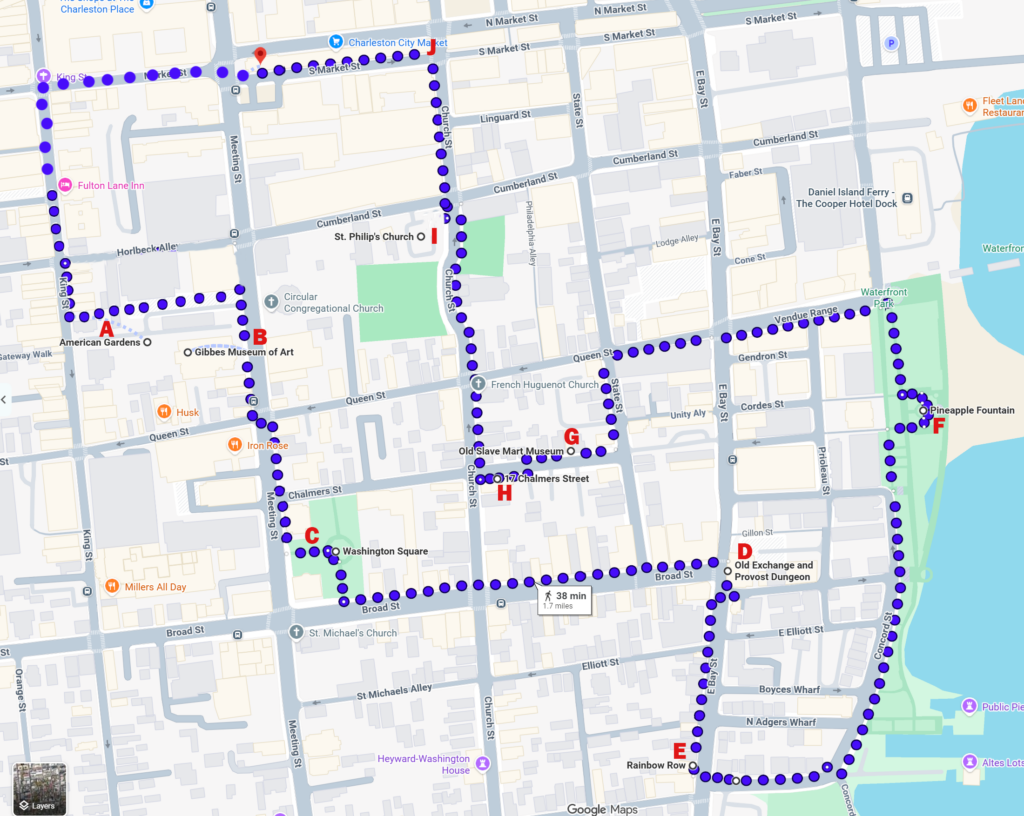
The self-guided walking tour is approximately 2 miles.
Allow approximately 60 minutes for walking, with additional time to admire the landmarks, take photographs, and explore attractions along the route. If you plan to visit museums or stop for refreshments, consider allowing two to three hours or more.
The tour begins and ends at Fulton Lane Inn, located at 202 King Street in Charleston’s historic district. The first stop is American Gardens, just a short walk from the Inn.
Yes! The walking tour is free to follow, and many of the landmarks, gardens, and historic streets can be enjoyed without admission fees. Museums, including the Gibbes Museum of Art, Old Exchange and Provost Dungeon, and Old Slave Mart Museum, charge admission.
Absolutely. Charleston’s historic district is well suited to exploring on foot, with many landmarks located within a relatively compact area. Keep in mind that historic sidewalks, cobblestone streets, and uneven surfaces may require extra care.
Yes. For a longer walk, follow the optional extension from Washington Square south along Meeting Street to White Point Garden and The Battery. This scenic addition offers views of Charleston Harbor and the historic homes along South Battery.
Continue Exploring Charleston
There's always another side of Charleston waiting to be discovered. From historic streets and hidden courtyards to local restaurants, galleries, and memorable experiences, explore our collection of curated guides to make the most of your stay at Fulton Lane Inn.